Pregnancy & Dental Health.

Being pregnant is a journey in a female’s life which does affect one’s dental healthcare. Some of us tend to forego our dental care while we are busy battling with morning sickness, weight fluctuations, body aches, and clothing drama. On a regular basis, many of us tend to avoid going to the dentist due to lack of insurance, fear, costs, lacking interest, or just unaware of dental diseases. During the first trimester, some clinicians will advise you to avoid visiting a dentist unless it is an emergency plus avoid x-rays and medications but some will say that they’re safe in moderation. You, the mother, has to make that final decision to seek dental care or not after researching the risks and benefits.

 Some of the issues that can develop during pregnancy are cavities, gingivitis (plaque with red and bleeding gums) which can lead to periodontitis (plaque that releases toxins causing an infection), erosion (caused by the gastric acid from the vomiting), loosen teeth, and dry mouth. I’ve actually interacted with females who have suffered from some of these issues where some seek while others were scared. One female had loose teeth which caused her much discomfort but her dentist advised an increase in her calcium intake. She was fine after delivering! According to Pregnancy Risk Assessment Monitoring System in some states: over 50% didn’t have dental insurance, over 50% didn’t do a cleaning while pregnant and over 50% didn’t discuss dental care with their clinicians. If you have dental insurance, please use it and if you do not have then try to find a public hospital or community health center in your area. Dental health is a crucial part of our overall health. Also, parents should avoid passing their saliva onto their children via kissing on the mouths and sucking the pacifier clean because it can make them sick. You have to remember that we only have one set of real adult teeth to take care of so make the extra effort to protect them.
Postpartum Care After Delivery

The authors shared their maternal experiences in the last two posts of the blog. Although I have not been a mother yet but from what I have heard from my mother and sister’s maternal period experiences and from my personal research, in this blog post I would like to share some tips on how to take care of oneself after the maternal period.

What is postpartum care?

The postpartum period refers to the first six weeks after childbirth. Especially for a new mother, adjusting to everyday life after the birth of a baby has its challenges. After the child birth, it is very important to take care of oneself along with paying attention to the needs and requirements of the newborn. Diet, sleep and proper rest along with right feeding will keep new mother and newborn baby healthy and relaxed. In order to ensure that she can be in the best place physically, mentally, and emotionally to care for her newborn, around the world many cultures have their own beliefs and practices that focus on the new mother after birth.

mom

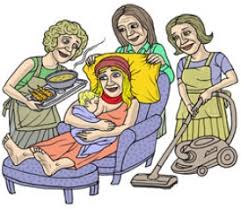
From what I have seen in my Bengali culture, the new mother often returns to her parents’ home with her newborn for up to two or three months of focused care. There, many pairs of hands are on call throughout the day as mostly live in joint family who can also hold the baby whenever the mother needs a break. The women of the family cook easily digestible special foods that speed up recovery and increase the production of breast milk as well as keeping the body warm are recommended in Bengali style of postpartum care. Accordingly to the following article postpartum care in these cultures is aimed at keeping the new mother warm; it is believed that this will reinstate her humoral balance.

Confinement Period after giving birth: 

confine

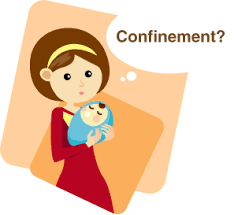
Forty days of rest period of the mother after delivery to keep the mother and child away from infections as well as to restore her energy to focus on caring for her baby and herself is known as the ‘confinement period’ during postpartum. Few restrictions are also induced during this period to avoid future health problems for the mother and child.


Baby Blues and Postpartum Depression:

Baby blues also known as postpartum blues are common result of hormones, tiredness and overwhelming feelings of responsibility that a new mother feels first few days after having a baby. About 70%- 80% of new mothers experience this and it can happen 2 to 3 days after having the baby and can last up to 2 weeks. They usually go away on their own, and there is no need for any treatment. There are few ways to cope with baby blues, for example, getting as much sleep as possible, avoiding alcohol or any kinds of harmful drugs, taking a time out for oneself.

baby.jpg

Postpartum depression: The baby blues are different from postpartum depression and it is a depression that occurs when symptoms (include sadness, changes in sleeping and eating patterns, low energy, anxiety, and irritability) are much more severe  last for more than two weeks and interfere with functioning. It is a medical condition that needs treatment along with counseling or support groups to get better. In my culture, the holistic approach as mentioned above to the postpartum period acts as a preventative to postpartum depression.

Before writing on this topic, I never knew properly about these two terms. Two years ago when my sister gave birth to her daughter, my mother and I went to Bangladesh, stayed two months to give care and support as she lives in there with her husband. Now when I think of those days, how much these helped my sister to overcome these period. I believe a mother‘s support system should be nourishing and supportive in such a way that she is able to get all the help and affection she needs in order to heal and mend well after birth both physically and emotionally.

happy

21 and Pregnant

On the last blog post we spoke about the problems of being older and pregnant, however, being young and pregnant has it own set of worries. Like Dympna when I found out I was pregnant, a couple of days after my 21st birthday, I was in completely denial. At first I thought I misused the pregnancy test so I took it three more times only to get the same result. After I took the tests I spoke to my boyfriend about what we should do and we both decided that we were not economically ready to raise a child. On that day I found out how expensive it was to raise a child, with the average cost being $233,610. When I saw that number I knew that financially I was not ready to have a child, but then I read more about raising a child and found out that many people feel unprepared to have a child regardless of their income.

ChildCare-WordCloud

Reading about other parents struggles made me feel better about my own, but then I realized that those parents were all older than me. Then, the anxiety of telling my parents began to set in and for a while I debated on even telling them right away. That anxiety only increased when I remembered that I had to tell my boyfriend’s parents as well. I begged my boyfriend to wait until I started showing more, however, he insisted that we told our parents as soon as possible. Many young adults feel nervous about breaking the news to their parents because of the uncertainty of how their parents would react. I was sure that my father would be very disappointed in me, but when that day finally came it was my father who turned out to actually be the happiest about the news of his first grandson.

iStock_000013204923XSmall

The hardest part of being young and pregnant is trying to figure out how to balance raising a child, going to school, having a job, and maintaining a relationship. During my pregnancy I was certain that I would still be able to take five classes, work twenty plus hours a week, and go on dates with my boyfriend when the baby came. Now that the baby is finally here all those things I was certain about have changed and nowadays I’m trying to figure out how to shower before 2 A.M. However, the birth of my baby also brought more love into my life than I ever expected. Some days I’m even happy to have a baby at this age because I can not imagine waiting any longer to hold my son in my arms.

IMG_6363

Pregnancy after 40.

When I was 36 I gave birth to my second child and last child (so I thought). I was so surprised at the amount of testing I had to have done compared to when I was pregnant with my first child in my 20s. As if we didn’t have enough to worry about, some doctors and nurse are hell-bent on scaring us into getting the procedure done to make sure our child is healthy. I turned down the amniocentesis because I felt it was too invasive. So the left it at that. Thankfully my son was born a very healthy baby. Six years later I was surprised by the stork when I found out I was pregnant at 41. At first, I was in denial about the whole thing. After all, I want planning on having more children. I was in my 40s now. This time was supposed to be for me. I had just.started.in Hunter college and I was planning on taking on the whole world. The reaction from family members where mixed. My husband saw it as a divine intervention because God wanted to give us another child. Well was God going to support another child? My oldest child was very excited about having a new sibling but my son, my main man insisted it was just food in there. Eventually, he came around when I informed him he would be in charge of the new baby’s safety. For the first time, he was excited about being a big brother. I was still having a little difficulty coming to terms with it, after all, been pregnant in your 40s came with lots of risks and of course a boatload of testing that made my second pregnancy look like a field day. I realized that it wasn’t the baby that I was fearing it was anxiety that I got from the birth of my second child. When he was born I had a bad experience during my c-section, that made me not ever want to have more children. And of course there was a lot more test this time and the doctors were a lot more insistent that I have them done. Plus I had a lot more complication this time around. I put it all down to my age. I  worried the whole time. I did not bask in the Joy’s of this pregnancy like the others because I was expecting something terrible to happen. By the time it came to have my third C-section which by the way was very scary for me, I had been poked and prodded some many time, it took six nurses and 12 different attempts to get an IV into me. Finally, they called in the heavy artillery( the anastiologist) and he was able to insert to IV. My hands looked like I just went 12 rounds with a prizefighter. I guess all of the worries were not showing because the nurse that was tending to me let me know that I was at very high risk of bleeding out because this was my third C-section. Hence the two IVs and hence all the worry. When a woman has multiple C-section they are at risk for so many things during surgery. That day April 17 at 8.52am my third amazing child came into the world safe and sound and I survived my third C-section. My heart didn’t give out like I thought it would and all that stuff I worried about during my pregnancy was gone. The whole surgery and hospital experiences were completely different from my second pregnancy. It was mainly because of the hospital I choose this time. I was cared for like I was a VIP from the time I got there to the time I left. Conor was born at Queens Presbyterian in Flushing and the nurses and the CNAs could not have been any nicer if they tried. Being pregnant over 40 does come with its own set of problems, but worrying about them is the doctor’s jobs. I had to keep reminding myself throughout the whole pregnancy that I was a healthy 42-year-old. There was nothing to worry about. Finally Inwas able to enjoy my new bundle. I know in the beginning I was not happy about being pregnant but that changed as soon I met my 2nd main man Conor. As for his older siblings, they can’t get enough of him until he drops a load and then I’m on my own. Lol. The medical field has made some great advances over the years and now more and more women are choosing to start their families in their 30s and 40s. Maybe it was Devine inspiration or just whatever. But here I am now a mother of three amazing beings and still taking on the world.

Cross-Culture Parenting Differences: Bangladesh vs The United States of America

Image result for parenting

Parenting is one of the most difficult and challenging responsibilities a person can experience and parenting styles are as diverse as parents themselves. Parental attitudes, practices, and non-verbal expressions are few gatherings of parenting styles that illustrate the nature of parent-child relationships. For the reason that there are no difficult and fast written rules with parenting, from many different examples including their own parents, role models, life experiences as well as from culture, the society they live in, those learning how to parent.

I was born and raised in Bangladesh and when I was 16 years old, my family and I moved here. Since many of my relatives live here with their own families, I have got the opportunity to experience the differences between the two countries in child rearing. Here are some behaviors where parenting styles vary from a Bengali parent to a Western Parent.

Family structure: The children of Bangladesh, a predominantly Muslim nation with large minorities of Hindus, Christian, and Buddhist, are raised within a hierarchical kinship structure and religious beliefs. Childhood is viewed as a sensitive time period where children are mold-able which is why obedience to authority, passivity, and interdependence are highly valued. Usually, families live together in a multi-generational household, which is why there is a strong importance on respect of elders in the Bengali culture. Moreover, children living with their parents until, and at times even after marriage.

Related image

Punishment: 

Image result for punishment childDiscipline is often strict and physical punishment such as spanking is considered a normal aspect to parenting in many Bengali families as sometimes they are used to discipline, control, and teach the child appropriate behaviors. In contrast, beating a child is against the law  in the Western countries. In order to reflect what they did wrong, punishments such as to deprive of playing games or going outside (being grounded).



Schooling: hWhen it comes to education, Bengali parents are really strict. To them, education equivalents to a bright future for their child; therefore, from an early age, children are being sent to language, science, math, music and art classes. Once they become an adult, in order to increase their employ-ability rate these are all being done. On the other hand, when it comes to their child’s education, western parents may seem to be more lenient where children are given circumstances to discover and develop their individuality.
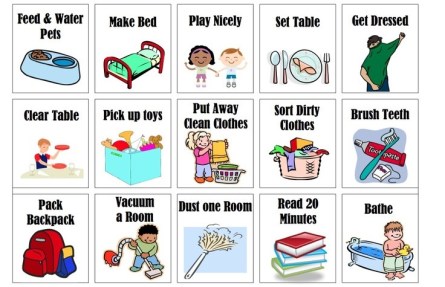
Household chores: Children are anticipated to run errands and help around the house. By the age of 13, my brother and I were already doing household chores such as ironing our school uniforms, cleaning rooms and cooking, etc. Research displays that household tasks boost children to be more responsible and it helps keep them grounded. Furthermore, the research goes into detail that chores benefit children to be more organized, compassionate, and considerate of others. Additionally, it curbs boredom and disobedience.

t

Oppositely, in here, the biggest chore they do is put their things away and/or wash the dishes. This is because chores are seen as laborious for children and making them do chores equates to child abuse/ child labor. The Maryland Population Research Center states  a 6 to 12-year-old child spends an average 24 minutes a day doing chores, usually done under pressure.

According to a YouTuber named Kristina Kuzmic, “loving them does not mean making sure they’re always happy and giving them every single little thing they want. It means nurturing them to be hale and hearty, decent human beings. In conclusion, parenting is a two-way learning process. Regardless of any country, parents believe in doing the best for their children all the time. We pick up from children every day and in return, we teach them right from wrong.

r.jpg

Circumcision: Basic Information About It.

Circumcision is a very sensitive topic which should be approached with care and consideration of the parent/s views about it. Usually, only males are circumcised and the procedure is mostly done when they’re a newborn baby. The foreskin is a tissue which covers the tip (meatus and glans) of the penis and it gets removed via a surgery. This procedure is elective so if you’re not guided by religion, tradition or culture to make it mandatory. It can become a medical necessity to be circumcised due to various health reasons but readings have stated that it becomes riskier as we age. American Academy of Pediatrics (AAP) has stated that the benefits do outweigh the risks to recommend circumcision but not universally as it is the final choice of the parent/s or caregivers. A circumcised and uncircumcised penis have different physical appearances. We just have to find a way to accept whichever version we have unless we have a means to change it. Do not allow people to body shame you in any way so you have to learn to like and defend yourself. Newborns’ circumcision is a few minutes whereas adults are a hour or more then the healing is a few days. Will my baby feel pain? There may be pain but your baby’s doctors will use medications to help relieve it. You may be wondering what are some of the benefits so here they are: a lower risk of getting urinary tract infections, of sexually transmitted diseases, of penile cancer, of giving females cervical cancer, of balanitis (inflammation of the glans), of balanoposthitis (inflammation of the glans and foreskin), phimosis (unable to retract the foreskin backwards), and paraphimois (unable to extend the foreskin outwards). Some of the risks are excessive bleeding (inform your doctor if any family member has a history of bleeding prior to the surgery), infection, meatitis (inflammation of the opening), and injury. You can prevent some of the things with proper hygiene practices so you as a parent/ caregiver is responsible for teaching your male children how to care for their uncircumcised penis. I do not want my child to get sick requiring medications, sonograms, etc. as this can affect their bladder and kidney functioning. I’ve seen parents/caregivers struggle with a sick male baby with an uncircumcised penis so I would definitely advocate for circumcision based on medical reasons. For me, I feel that it is beneficial and has better health outcomes based on the little research I have done and from witnessing how others have had issues with their uncircumcised babies. My Grandmother said that during her era, some babies who were born at home in Guyana were circumcised as their parent/s granted permission to a Muslim priest to do it. According to the World Health Organization, the rates of circumcision has been declining in USA which comes from records of hospital births.


“You’re Pregnant not Disabled”

By: Narissa

October 18, 2018

wordpress1  wp2

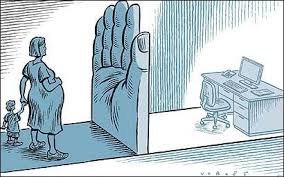
In 1960 60 percent of women having their first child worked while pregnant, this number has now increased to 72.3 percent within the last decade. So when I decided to continue working after I found out I was pregnant, I thought it would be no big deal. Many women in my job had stayed working throughout their pregnancy with one lady even staying up until her water broke! For the first three months I did not tell anyone about my pregnancy but then one day my belly just expanded and there was no denying it.  My managers, supervisors and fellow associates all congratulated me which made me believe that everything would be just fine. Before I confirmed my pregnancy, I read an article that popped up on my snap-chat news-feed about women being fired or demoted while pregnant. After the excitement that my pregnancy news was met with, however, I thought nothing would happen to me. Then, three months later when I was about six months pregnant I got called into the office by my head manger and supervisor. My manager started off by saying that she worked while pregnant and during one of her pregnancies she had to have her boss escort her out because she did not want to leave even after her water broke. Even though I am many years younger than my manager, I know the serious risks of waiting until after your water breaks, and have been warned by my prenatal doctor about not seeking medical attention after my water breaks. That reckless story was followed by the hurtful comment “you’re pregnant not disabled.”

dec14_18_459881578

When I heard those words all the stories I read about pregnancy discrimination in the workplace started to come back to me. In 1978 Congress passed the Pregnancy Discrimination Act which made discrimination based on pregnancy and childbirth related medical conditions illegal, however, since then there has been countless number of lawsuits dealing with the treatment of pregnant women in the workforce. What surprises me the most about the cases I’ve read about and my own experience is the discrimination sometimes comes from fellow mothers! While pregnancy is a beautiful experience it comes with struggles that only other mothers know about and I thought that these mothers would be more understanding towards their pregnant workers because of the shared experience. After all the stories I read and talking with two members of this blog who also had a rough time at their jobs while pregnant, I believe more legal actions need to be taken in regards to pregnancy discrimination.

pregnant                          Pregnancy-1


C-Sections

By: Dympna

October 11, 2018

Having a new baby is a very exciting time in someone’s life, whether it’s your first child or your third child. It can also be a little nerve racking too especially if it is your first time giving birth. We all have this image in our mind what the actual labor will feel like and how we will handle the labor. For the most part, we go into labor and deliver a healthy, happy baby but for some of us it doesn’t work out as well as we planned. For my first pregnancy, everything was perfect during the whole pregnancy. Then the due date comes and goes and my darling daughter was not making her grand entrance into the world. Fast forward almost ten days later and she still wasn’t showing any sign of making an entrance. The only thing left to do was induce labor which means forcing your body into labor. 14 hours later, there still wasn’t a baby so the doctors decided they would do an emergency c-section. Within minutes she was here at a healthy 7lbs 4 oz. The biggest downside to having a c-section for me was I did not get to hold my baby until the next day, plus it took a little longer to recover after all I just had major surgery. Now in 2018, I have 3 children, all born through c-section. Each one was a totally different experience. It is reported today in the United States that almost 33% of births are through c-section. Some of them are for medical reasons and some are performed for convenience. What ever the reason, c-sections are becoming controversial. Women have been shamed because they’ve had c-section. They have been accused of been lazy and afraid of the pain. They been accused of not experiencing childbirth or knowing  what it is like to have a child naturally. Kate Hudson once said the laziest thing she ever did was to have a c-section. Although I believe her comments were taken out of context, there is nothing lazy about having a c-section. 15 years ago it saved my daughters life. As for experiencing child birth, I might not have had the same experience as some one who delivered vaginal but I have experienced childbirth three times and I have the scars to prove it. Does it really matter how we bring our children into this world as long as they get here safe and sound? The people out there who feel like they are entitled to shame mothers who have had c-section over vaginal births need to step back and look at the bigger picture, which is a happy healthy baby. We all have the same jobs ahead of us, raising our children happy and healthy.

FB_IMG_1538616801910

Concerning Levels of Heavy Metal in Baby Food

By: Roberta

October 4, 2018

ses1-gmo-1.45-front-d-NAGH  swa1_simplepac_front-d-NAGH

As a mother, I always want to give my daughter the best, especially when it comes to the food that she eats. I always made sure from the start that I buy organic foods, whether it be snacks, pouches, food in general and her milk. I still do the same, however the new discovery of concerning levels of heavy metals in baby food has made me question a lot! I always turned to organic food and products when it came to her because that is what I thought was the best and healthiest option. From the jump, I always bought baby food brands such as Beechnut, Earth’s Best, Happy Baby, Plum Organics and Gerber Organics. I continue to do so, however I am more cautious now and you should be too. When my daughter was just a couple of weeks old, I had gone to a Walmart to buy her formula. I remember standing in the aisle with my boyfriend for about 5 minutes. We noticed Similac non-gmo and just regular Similac formula. Quickly we googled the difference between the two and found out that the non-GMO contains ingredients that are not genetically engineered. Of course the non-GMO was a couple of dollars more expensive. But we thought to ourselves, why is there even an option when it comes to formula? Why are there genetically modified organisms in formula? That is when my skepticism in the food industry especially when it comes to baby food, started to occur. A couple weeks ago, my sister had sent me a link about the new findings of concerning levels of heavy metal in baby food. Not to my surprise, many of these products were sitting right in our food pantry. I had chosen organic always because I thought of it as a better option. But is it really? Where is the FDA when this is all happening? I now try to avoid those foods, even though it saddens me because they were some of her favorites. My advice to other mothers is to always look into what you are giving your child and that homemade is the best way. This link will take you to the website discussing this issue along with a list of foods that are a concern for your child: https://www.consumerreports.org/food-safety/heavy-metals-in-baby-food/

The Working Mother, It’s Ups & Downs

By: Roberta

September 27, 2018

I am sure every mother has this dilemma, do I work or become a stay at home mom? As mothers, we want to give them EVERYTHING. When we’re at work and or school, we miss them. When we’re at home with them, we wish we were at work so that we can provide the best life for them. I sure know I get these thoughts more than often. Being a full time mom, full time student and a part time bank teller isn’t easy.  Most of my days I feel like I spend more time at work or school than with her. It isn’t an easy decision, especially when there are others around you who will judge you for any decision that you do make. Sometimes I’ve felt like my daughter forgets who I am, or isn’t as attached to me. There have been days where I just wish I can quit everything and just raise her full time. However, I took a step back and realized that I am working hard right now so that we can enjoy ourselves later. In the long run she’ll thank me and she won’t remember when mommy wasn’t home all day because of school, being that she’s only one. Always being on the go is stressful at times but I’ve learned how to minimize my stress. I always make her lunchbox and diaper bag the night before along with picking out her outfit. Therefore, I’ll only need to wake her up, brush her teeth and get her dressed while doing what I need to do for myself. Putting her to bed as early as possible has worked too so that she isn’t a grumpy little one in the morning! My advice to any mother or mother to be, do what makes you feel happy and what’s the best for the both of you!Just remember that being a working mother is now more common than ever, ​in the United States today, more than half of mothers with young children work, compared to about one third in the 1970’s.  However, even with this increase of working mothers their is still little access to even the most basic workplace supports, such as job-protected paid parental leave, earned sick days, or quality and affordable child care . Us working mothers need to come together and fight for fairer treatment in the workplace because it not only affects us but will also affect our daughters when they grow older and decide to become working mothers themselves. LULI